Heat and glare under glass
A glass roof lets the sun's heat in as well as its light. Solar-control and tinted glass lets less in, and the g value says how much: one maker's double-glazed units run from 0.19 to 0.53. The lower the figure, the less of the sun's energy reaches you.
What the g value says, which tints cool most and what else keeps a glass roof comfortable.
Free, no obligation. One local fitter prices it, not five.
- 0.19the lowest g value in one maker's range
- 0.53the highest
- 0.29–0.35blue-tinted units
- 0%UV through 7.5 mm laminated
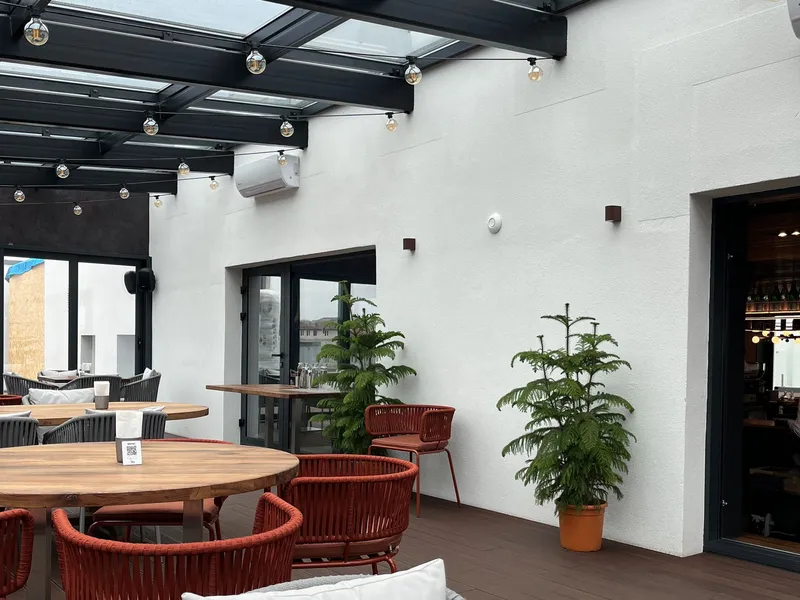
What the g value means
The g value is the share of the sun's energy that a pane lets through as heat and light together. A pane at 0.5 lets half of it in, and one at 0.2 lets a fifth. Lower means cooler and darker. It is the number to ask for when a seller says the glass is solar control.
The tints, side by side
Solar control, high
0.19
One maker's Suncool 30/16 in a double-glazed unit, the lowest figure in its range.
Solar control, light
0.43
Suncool 70/40, which lets in more light and more heat.
Blue
0.29 to 0.35
Cool and bright, with a tint.
Grey
0.31 to 0.41
Cuts glare, and darkens the view a little.
Bronze
0.32 to 0.43
A warm tint.
Green
0.36 to 0.43
A cool green tint.
These figures are for one maker's double-glazed units. A single laminated pane will not give the same numbers, so ask the seller for the figure for the glass in your kit.
Price your glass pergola
Four taps, and the price shows as you go. Your name and number come last, and only if you want a fitter to price it.
A glass pergola off the house, about 4 × 3 m, fitted: From €2,050 for the kit, about €1,600 to fit.
How the price is worked out
The kit figure is where a glass-roof kit starts in Ireland now, supply only. Sellers list one range for every size, so a bigger one costs more, and a made-to-measure one is quoted separately. The fitting figure is what one seller charges its crew to put up a glass-roof veranda of that size within 100 km of its showroom. A base, electrics, lights and heaters are not in either, because they depend on your garden. Use it to plan with. It is not a quote: a fitter prices yours after seeing where it goes.
Glare
Glare is what you feel when the sun is low and bright. Tint cuts it. So does a blind that runs under the glass, and so does shade from the house or a tree. See blinds, lights and heaters for what a blind costs.
Letting the heat out
Under glass in July, the air warms quickly. Open sides let it move, and a blind or a tint cuts what comes in. An enclosed glass roof with every side shut can be hotter than the garden around it, so leave at least one side open or fit a vent.
UV and the furniture
Laminated glass cuts UV sharply: 3% through 6.4 mm and 0% through 7.5 mm, against 57% for plain 6 mm glass. That keeps cushions, rugs and the floor from fading as fast.
More to read on glass roofs
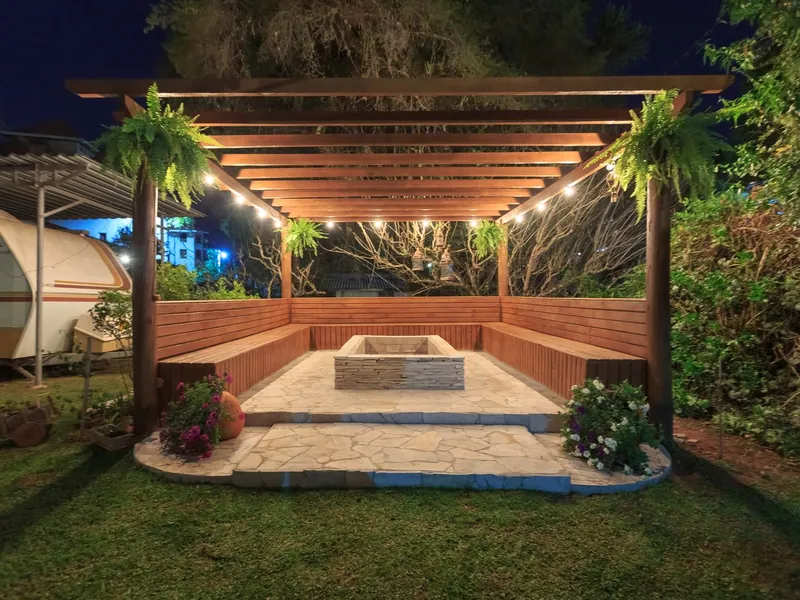 Blinds, lights and heatersWhat to add under the glass, and what each one asks of the frame.
 Clean and dryThe fall, the gutter, and what to do about condensation.
 Safety glass for a roofLaminated and toughened, in plain words.
 Glass or polycarbonateLight, noise, weight, cost and how long each lasts.Glass roof pergolasThe pergola with a glass roof off the back of the house, and what a kit costs.
 Side screensScreens and blinds down the sides, and what closing it in changes.
Before you order
Will a glass pergola get too hot?
It can, in July. Tinted or solar-control glass, a blind and an open side keep it down.
What is a g value?
The share of the sun's energy a pane lets through. A lower figure means less heat.
Does tinted glass spoil the view?
A little. Grey and bronze darken the view, and blue and solar-control glass can stay bright.
Does glass fade furniture?
Less than plain glass if it is laminated: 0% of UV passes 7.5 mm laminated glass against 57% for plain 6 mm.
Every page on this site
Glass roofs
Costs, sizes and rules
See the price before you say a word
Tap what you are after and how big. If you then want a written price, one local fitter in your county rings to fix a time to see the garden.